





Thermal Management Technologies for Electronic Components
With the rapid development of high-frequency, high-speed, and integrated circuit technologies, the power density of electronic components has increased dramatically, while their physical size continues to shrink. As a result, high operating temperatures have become inevitable, adversely affecting component performance. Effective thermal management has therefore become a critical issue in modern electronics.
Efficient heat dissipation in electronic devices is primarily influenced by the principles of heat transfer and fluid dynamics. Thermal management is essential for maintaining optimal operating temperatures and ensuring the reliability and safety of electronic systems. Current thermal control methods include natural convection, forced convection, liquid cooling, refrigeration, heat conduction, and heat pipe cooling.
1. Natural Cooling Methods
Natural cooling refers to heat dissipation without any external energy input, relying solely on conduction, convection, and radiation. Among these, natural convection is most commonly applied.
This method is suitable for low-power devices or systems with lower thermal demands, especially those with compact or sealed designs. In such cases, heat can be dissipated effectively without any active cooling mechanisms. Optimizing thermal conduction paths or enhancing radiation between the heat-generating component and nearby heat sinks can also improve performance.
2. Forced Air Cooling
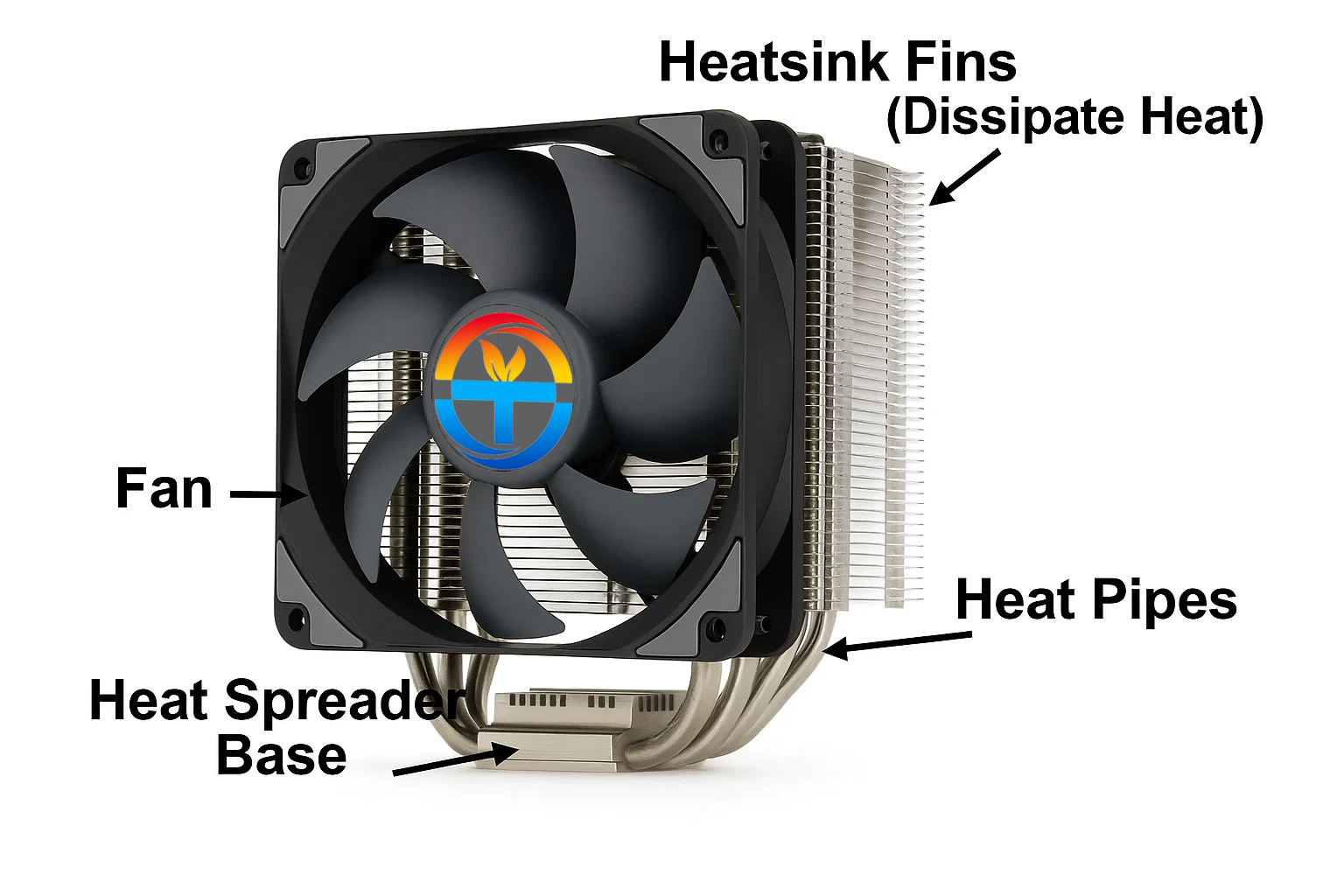
Forced cooling uses external devices such as fans to accelerate airflow around components, thereby increasing heat transfer. This method is simple, effective, and widely applicable in systems with sufficient airflow space or designated cooling structures.
To enhance convective heat transfer, engineers often increase the surface area of heat sinks by using fins or extended surfaces. These designs reduce thermal resistance and improve overall efficiency. For high-power components, turbulence-inducing elements can be introduced within the heat sink structure to further enhance heat exchange.

3. Heat Pipe Cooling
A typical heat pipe consists of a sealed container, a capillary wick structure, and a working fluid. In a vacuum environment, the fluid absorbs heat at the evaporator end, vaporizes, and moves toward the condenser end under slight pressure differences. There, it releases latent heat and condenses back into liquid. The liquid returns via capillary action to the evaporator, forming a continuous cycle.
Heat pipes offer extremely high thermal conductivity—hundreds of times that of copper—and are often referred to as "near-superconductors." However, they have a thermal limit: if the heat input exceeds a critical value, the working fluid may fully vaporize and stop circulating, leading to failure.
4. Liquid Cooling Methods
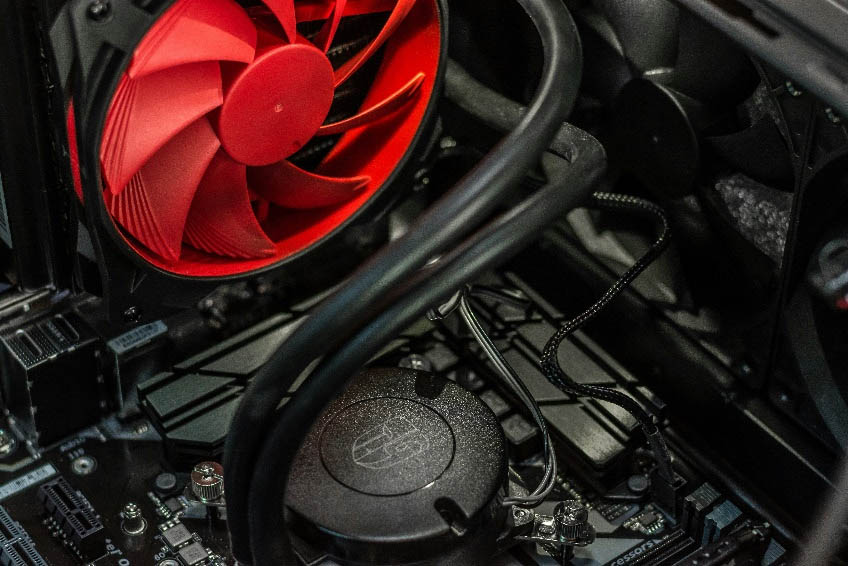
Liquid cooling is used primarily in high-density heat applications. It can be classified into indirect and direct (immersion) cooling.
• Indirect coolinginvolves transferring heat from components to a liquid coolant via modules or interfaces such as cold plates, conductive blocks, or jet modules.
• Direct coolingallows the coolant to come into direct contact with electronic components, effectively absorbing and removing heat. This method is particularly suited to high-heat-density or high-temperature environments.
5. Refrigeration-Based Cooling
Refrigeration-based cooling methods include phase-change cooling and thermoelectric cooling (Peltier effect).
• Phase-change coolinguses refrigerants that absorb large amounts of heat during phase transition (e.g., evaporation). It is commonly applied in special environments and high-performance computing systems.
• Deep coolingtechnologies provide efficient operation across a wide range of temperatures and are compact in structure.
• Peltier cooling, or thermoelectric cooling, uses the Peltier effect of semiconductor materials to create heat absorption and release across junctions. It is compact, easy to install and remove, and ideal for scenarios requiring moderate cooling. However, it is less energy-efficient and has higher cost.
Typical Peltier systems handle thermal loads ≤300W and operate under 100°C.
6. Energy Transfer in Thermal Systems
To manage heat effectively, it must be transferred from the source to an environment where it can be dissipated. With increasing power densities and smaller device sizes, thermal management solutions must be efficient and compact.
Heat pipes stand out for their excellent thermal conductivity and isothermal behavior, making them ideal for managing heat in electronic and semiconductor devices. Their flexibility, adaptability, and reliability have led to widespread adoption in various industries.
Designing heat pipe systems requires careful consideration of material selection, manufacturing processes, cleanliness, and environmental factors like gravity or external forces. Temperature monitoring is also essential for quality control and system stability.
Linda / sales director
📞 Tel: 86-769-26626558
📞 Whatsapp: +86-15818382164
📩 Email: info@tongyu-group.com
🌐 Website: www.tongyucooler.com
✏️Factory name: Dongguan Tongyu Electronics Co., Ltd.
● Address:
- Vietnam: Que Vo Town, Bac Ninh Province.
- China: DongGuan City, GuangDong Province.